
HVAC Guide · 7 min read
Lake Cumberland Cabins and Rentals: An HVAC and Humidity Checklist for Owners
By QC Heating & Cooling Pros · Published October 2, 2026
The short answer
The biggest HVAC challenge for a Lake Cumberland cabin or rental is humidity during the weeks it sits empty. Leaving the air conditioning off entirely in summer lets moisture build until the cabin smells musty and mold takes hold; running it at a normal setting the whole time wastes money. The fix is to keep the system running at a modest "away" setting (around 78-80°F with good dehumidification, or a dedicated dehumidifier), keep the condensate drain clear, and have the system checked before peak season. A ductless mini-split or a smart thermostat makes holding that away setting cheap and simple.
Why lake homes fight humidity
Southern Kentucky summers are humid to begin with — Somerset averages heavy humidity and over 50 inches of rain a year — and a home right on Lake Cumberland sits in even damper air. A cabin that is closed up for two or three weeks between stays, with the AC off to "save money," becomes a sealed box of warm, moist air. That is exactly the condition mold, mildew and that unmistakable musty smell need, and it is hard on furnishings, flooring and drywall.
Then comes the holiday weekend: the family arrives, every room is occupied, showers run, the doors open and close all day, and the system that sat idle for weeks is suddenly asked to cool and dehumidify a full house fast. Systems fail under exactly this idle-then-hammered pattern, which is why Burnside and Jamestown owners call us more than year-round homeowners do.
The "away" setting that protects the cabin
Turning the AC completely off between stays is a false economy. A better approach is to hold the cabin at a modest away setting — many owners use around 78-80°F — so the system continues to run occasionally and pull moisture out of the air. The small amount of electricity costs far less than remediating mold or replacing a damp-ruined mattress.
A programmable or smart thermostat makes this effortless: hold the away setting between stays, then schedule or remotely trigger comfortable temperatures a few hours before guests arrive, so they walk into a cool, dry cabin instead of a muggy one. For rentals, that difference shows up directly in reviews.
When the AC runs but the cabin still feels damp
A frequent lake-home complaint is "the AC is on but it still feels sticky." Usually the culprit is not refrigerant — it is that the system is oversized and short-cycles, cooling the air quickly without running long enough to wring the humidity out of it. A clogged condensate drain, leaky crawl-space ductwork pulling in humid air, or a system that is simply the wrong size for an intermittently occupied home all make it worse.
The answer is rarely "add Freon." It is correct sizing, a clean and clear condensate system, sealed ductwork, and sometimes a dedicated dehumidifier for a home that sits in lake air. We diagnose the actual cause rather than masking it.
Why ductless mini-splits suit lake cabins
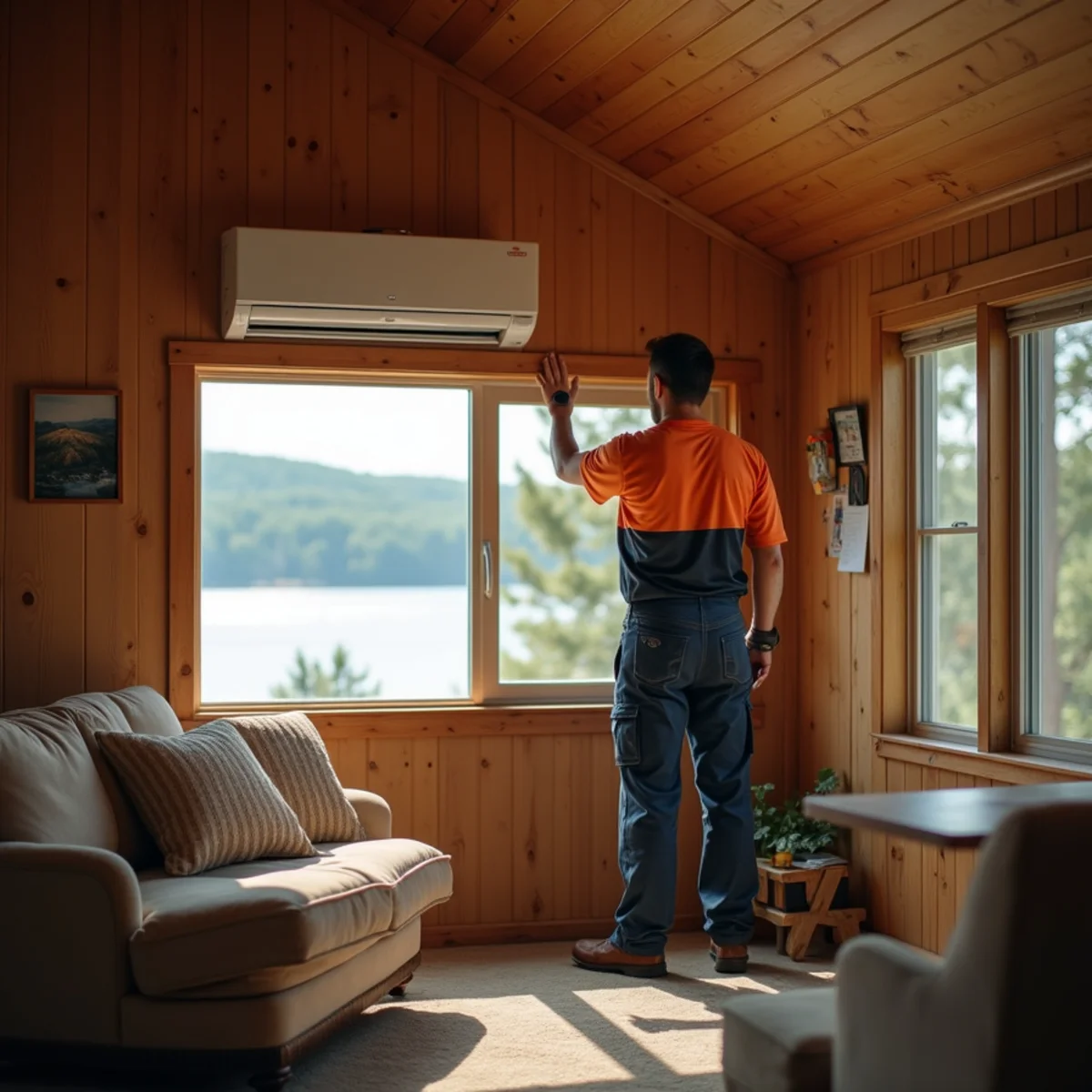
A ductless mini-split is a strong match for many lake properties. It can hold a space at a low away setting very efficiently, then bring it to comfort quickly before guests arrive, all without ductwork that can leak humid crawl-space air. For cabins, added bedrooms, bunk rooms, sunrooms and converted garages that never had good ducts, a mini-split heats and cools the space directly and quietly.
Multi-zone systems let you condition only the rooms in use, which suits a cabin where occupancy swings from empty to full. Our heat pump and mini-split page covers these systems in detail.
A pre-season checklist for owners
Before your busy season — and ideally with a professional check — run through this:
- Replace the filter and set a reminder to change it during long bookings
- Clear the condensate drain and confirm the safety float switch works
- Hose the outdoor unit clean of pollen, grass and lake debris
- Set a smart thermostat with an away setting and a pre-arrival schedule
- Check for musty smells and visible mold at returns and in closets
- Consider a dehumidifier for a cabin that sits in heavy lake air
- Have a technician verify charge and airflow before peak weekends
Have it checked before the season, not during a booking
The worst time for an AC to fail is Saturday of a booked holiday weekend, when every HVAC company is slammed and a dead system means refunds and bad reviews. A pre-season check — spring, before the June-to-August demand peak — catches the weak capacitor, the clogging drain, and the low charge before they strand you. Maintenance cannot guarantee a system never fails, but it dramatically cuts the odds of a failure at the worst possible moment.
QC Heating & Cooling Pros covers the lake communities around Burnside and toward Jamestown and Russell Springs, and we answer 24/7 when something does go wrong mid-booking. Our Burnside service area page and Russell Springs service area page cover these markets, and our AC repair page explains the humidity-driven failures we see most. Call (321) 478-0693.
Frequently asked questions
What temperature should I leave my lake cabin at when it is empty in summer?
Many owners hold an empty cabin around 78-80°F in summer so the AC still runs enough to control humidity without wasting energy. The exact number matters less than keeping the system running enough to dehumidify. A smart thermostat lets you hold that away setting and cool the cabin down before guests arrive.
Do I need a dehumidifier if I already have air conditioning?
Sometimes. An AC removes humidity as it cools, but a home that sits in heavy lake air, or one with an oversized system that short-cycles, may stay sticky even with the AC running. A whole-home or portable dehumidifier helps in those cases. We can assess whether your cabin would benefit before you spend on one.
Should I turn the HVAC off at my lake cabin in winter?
Keep some heat on. Letting a cabin drop below freezing risks burst pipes and a far bigger bill than the heat you saved, so a modest hold temperature with freeze protection is cheap insurance. A heat pump or mini-split set low, plus winterizing exposed plumbing, is the common approach — and a remote-reading thermostat lets you confirm it is holding between visits.
Still have a question, or need help right now?