
HVAC Guide · 6 min read
Spring and Fall HVAC Tune-Up Checklist for Kentucky Homes
By QC Heating & Cooling Pros · Published October 2, 2026
The short answer
The best time for an HVAC tune-up in Kentucky is spring for cooling — before the June-to-August heat — and fall for heating, before the first cold snap. A homeowner can handle the basics any season: change the filter, keep the outdoor unit clear of grass and debris, make sure vents are open and unblocked, and keep the condensate drain flowing. A technician should go further: checking refrigerant charge and airflow, testing electrical components and safety controls, inspecting the heat exchanger or heat strips, and verifying the system runs correctly. Maintenance reduces breakdowns and keeps efficiency up, though it cannot guarantee a system never fails.
Why timing matters in Kentucky
Kentucky works your HVAC system hard in both directions — humid 86°F-plus summers and January cold snaps into the teens. A tune-up is most valuable just before each demand season: have cooling checked in spring, before the system is running flat-out in July, and have heating checked in fall, before the first hard freeze finds the weak igniter or the low charge. Catching a tired part on a mild day is far better than discovering it at 2 a.m. in a heat wave or a cold snap.
It is also simply easier to get on the schedule in the shoulder seasons than during the peak-demand rush, when every HVAC company in the county is booked solid.
What you can do yourself
These homeowner tasks take minutes and prevent a surprising share of failures:
- Change the air filter — the single most impactful thing you can do
- Keep the outdoor unit clear of grass clippings, leaves, pollen and shrubs (allow 2 feet of clearance)
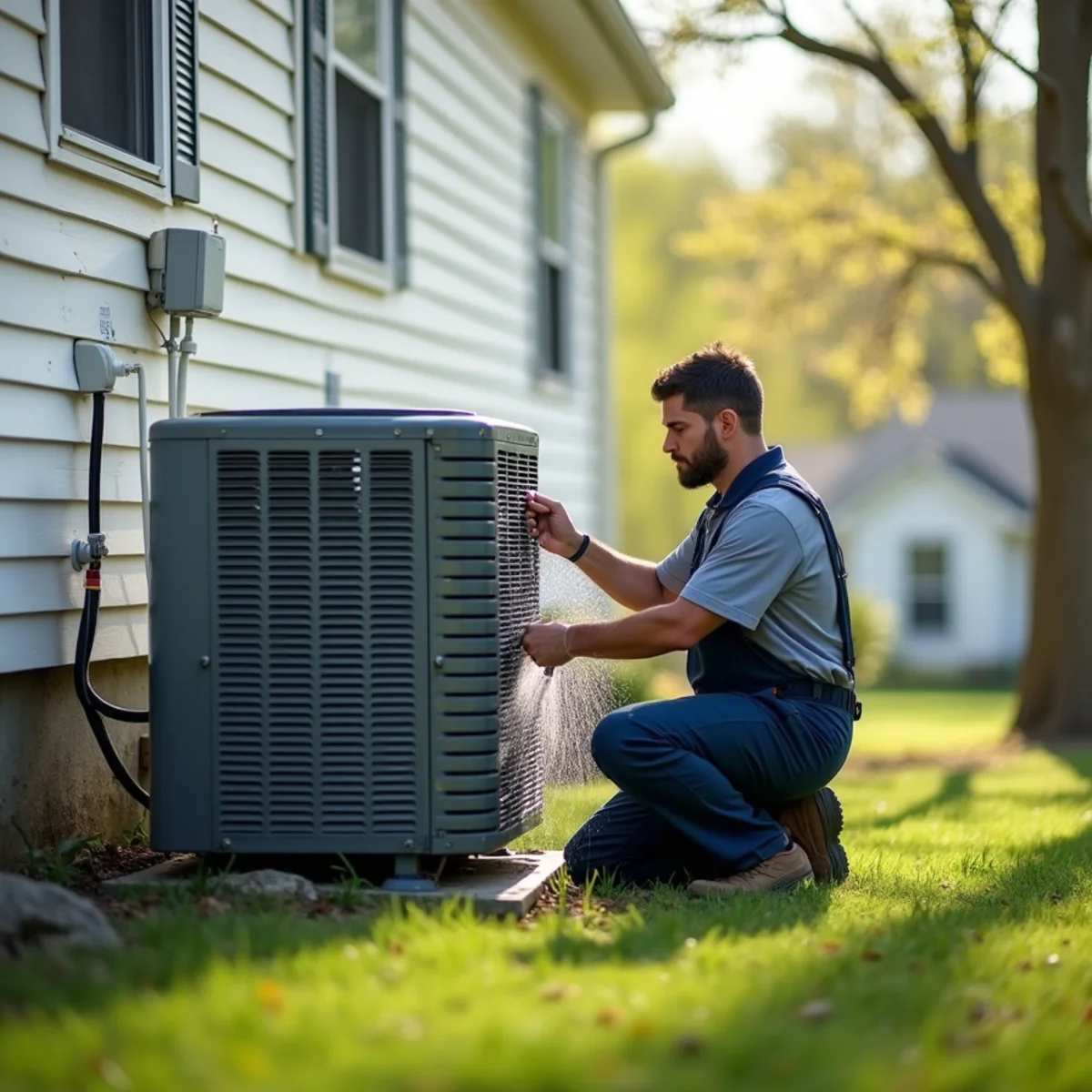
- Gently rinse the outdoor coil with a hose (power off) to clear surface debris
- Make sure supply and return vents are open and not blocked by furniture
- Pour a little water through the condensate drain line to confirm it flows
- Test your thermostat and replace its batteries
- Check and test your carbon monoxide and smoke detectors
None of this requires tools or expertise, and it keeps the system breathing freely — which is half the battle in our humid, pollen-heavy climate.
The spring cooling tune-up
Before cooling season, a technician should check:
- Refrigerant charge and signs of a leak (an AC does not use up refrigerant)
- The run capacitor and contactor — common summer failure points
- The outdoor fan motor and blower motor
- Coil condition and airflow across the evaporator
- The condensate drain, pan and safety float switch
- Electrical connections, amperage draw and overall operation
The capacitor and the condensate drain are the two parts most likely to strand you in July, and they are exactly what a spring check catches early. For lake homes and rentals, spring is the time to get ahead of the busy season — our lake cabin humidity guide covers that specifically.
The fall heating tune-up
Before heating season, a technician should check:
- For a gas or propane furnace: the igniter, flame sensor, burners and inducer motor
- The heat exchanger for cracks (a carbon monoxide safety issue)
- For an electric system or heat pump: heat strips, sequencers and the defrost cycle
- Safety controls, limit switches and the flue
- Blower operation and airflow
- The thermostat's heating operation and, for heat pumps, the auxiliary-heat changeover
A cracked heat exchanger is the one finding that takes a furnace out of service on the spot, which is why the fall check is as much about safety as reliability. For heat pumps — the standard across the rural county — fall is when to confirm the defrost cycle and backup heat work before the first freeze.
What maintenance can and cannot do
Regular maintenance keeps efficiency up, catches small problems before they become expensive ones, and meaningfully lowers the odds of a breakdown at the worst moment. It also keeps most manufacturers' warranties valid, which often require documented service. What it cannot do is guarantee a system will never fail — parts wear out, and we will never promise otherwise. Anyone who sells maintenance as a breakdown guarantee is overselling it.
What a tune-up honestly buys you is better odds, lower bills, and a professional set of eyes on the system twice a year. For a system that is 15-plus years old, it also gives you an early, unhurried heads-up when replacement is coming, so you can plan rather than scramble.
Schedule ahead of the rush
The homeowners who never get stranded are usually the ones who had the system checked in the calm of spring and fall. QC Heating & Cooling Pros serves Somerset and the surrounding counties, and we answer 24/7 when something does go wrong. Our AC repair page and furnace repair page explain the failures these tune-ups are designed to catch, and our Burnside service area page covers the pre-season checks that matter most for lake properties. Call (321) 478-0693.
Frequently asked questions
How often should I change my HVAC filter in Kentucky?
A standard 1-inch filter generally needs changing every 1 to 3 months, more often during heavy-use seasons, in homes with pets, or in pollen-heavy or lake-area locations. Thicker media filters can last several months. The simplest rule: check it monthly and change it when it looks gray and matted. A clogged filter is behind many "breakdowns."
Is an HVAC tune-up worth the money?
For most homeowners, yes. A seasonal check catches small, cheap problems before they become expensive emergencies, keeps the system efficient, and often keeps the warranty valid. It will not guarantee the system never fails, but it meaningfully improves your odds — especially for systems that run hard in our climate.
What is included in a professional HVAC tune-up?
A thorough tune-up goes well beyond a filter swap: checking refrigerant charge and airflow, testing the capacitor, contactor and other electrical components, clearing and testing the condensate drain, and inspecting the coil. In fall it also covers the heat exchanger, burners or heat strips, and safety controls. Ask what a given "tune-up" actually includes, because the scope varies a lot between companies.
Still have a question, or need help right now?