
HVAC Guide · 8 min read
Heat Pump, Propane or Natural Gas: Heating Choices for Pulaski County Homes
By QC Heating & Cooling Pros · Published October 1, 2026 · Updated October 2, 2026
The short answer
For most Pulaski County homes, the best heating system comes down to location. Inside Somerset on city natural gas, a gas furnace with central AC is affordable and effective. Outside the gas mains — which is most of the county — an electric heat pump is usually the efficient, practical choice, with a propane furnace as the alternative for homes that want fuel-based heat. A dual-fuel system (a heat pump paired with a gas or propane furnace) often delivers the lowest operating cost where it fits. Your fuel access, budget, and how hard the system will run decide which wins.
Natural gas: the city advantage
Somerset is unusual in that the city runs its own gas utility, Somerset Gas Service. If your home is on those mains, a high-efficiency natural gas furnace paired with a central air conditioner is hard to beat: natural gas is typically the cheapest heating fuel available here, the heat is strong and immediate, and the equipment is proven and affordable to repair.
The catch is simple — you have to be on the gas lines, and they do not extend far past the city. For in-town homes near downtown, Fountain Square and the US 27 corridor, gas-and-AC is often the straightforward answer.
Heat pumps: the county standard
Step outside the gas mains and running a gas line is not an option, so the question becomes electric heat pump or propane. For most county homes, the heat pump wins on operating cost. It moves heat rather than making it, so for the bulk of a Kentucky winter it heats far more cheaply than electric strips or, often, propane. South Kentucky RECC, headquartered in Somerset, has encouraged heat pumps for decades for exactly this reason.
A modern heat pump also cools your home in summer in the same unit, so you are buying one system instead of two. The trade-off is in the coldest snaps: when Somerset drops into the teens, the heat pump leans on its backup electric strips, and the bill climbs for those few days. A properly sized modern or cold-climate unit handles this well; an undersized or aging one leans on the strips too much.
Propane: fuel-based heat beyond the mains
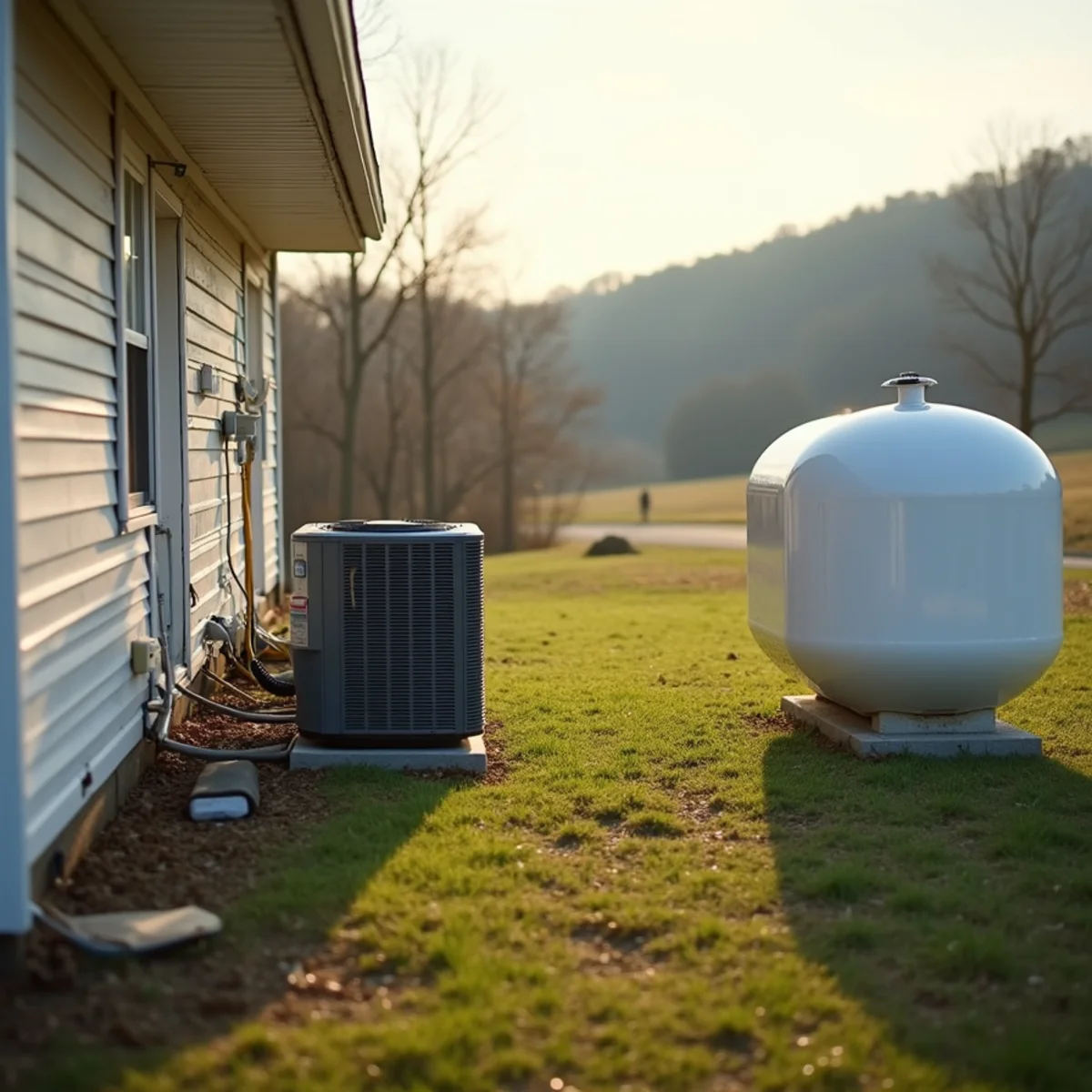
Propane furnaces are the other common choice in rural Wayne, Russell and outer Pulaski county. They make strong, hot air like a natural gas furnace, which some homeowners prefer, and they do not lose capacity in deep cold the way a basic heat pump does. The downside is fuel cost and logistics: propane prices swing, you own or lease a tank and schedule deliveries, and a regulator can struggle in extreme cold.
For a home that already has a propane tank and a furnace in good shape, staying with propane can make sense. For a new system, the math increasingly favors a heat pump for operating cost — unless you go dual-fuel and get the best of both.
Dual fuel: the best of both where it fits
A dual-fuel system pairs an efficient heat pump with a gas or propane furnace and lets the thermostat choose. Above a set outdoor temperature, the heat pump heats cheaply; below it, the furnace takes over and makes strong heat without the electric-strip penalty. For a Somerset home on city gas, or a county home with a propane tank, this can be the lowest-operating-cost setup available.
It costs more to install because you are buying and maintaining two heating sources, and it is not right for every home. But where it fits — a home run hard all winter, or one that wants both efficiency and strong cold-weather heat — it fits very well.
How to choose for your home
Walk through these questions:
- Are you on Somerset city gas? If yes, gas-and-AC is a strong default.
- No gas main? Compare an electric heat pump (lowest operating cost most of the winter) against propane (strong heat, higher and more variable fuel cost).
- Do you run the system hard all winter, or want strong cold-snap heat? Consider dual fuel.
- Is it a manufactured home? You need mobile-home-listed equipment, which narrows the options.
- What is your budget — lowest install cost, or lowest total cost over 15 years?
There is no single right answer for the whole county, which is the point. The right system depends on your address, your fuel, and how you live.
Get a straight recommendation
We size every system with a load calculation and recommend based on your actual home, not a one-size pitch. If you want the heat-pump details, our heat pump repair and installation page goes deep on these systems; for furnace specifics across all three fuels, see our furnace repair page; and our HVAC installation page covers what a proper replacement involves. If you are in Monticello or rural Wayne County weighing propane against a heat pump, our Monticello service area page speaks to that market directly. Call (321) 478-0693 for an honest assessment.
Frequently asked questions
Is a heat pump cheaper to run than propane in Kentucky?
For most of a Kentucky winter, yes — a heat pump moves heat rather than burning fuel, so it typically beats propane on operating cost in mild and moderate cold. Propane can pull ahead only during the coldest snaps, when a basic heat pump leans on electric backup. A dual-fuel system captures the best of both.
Can I get natural gas if I live outside Somerset?
Usually not — Somerset Gas Service's mains do not extend far past the city, so most county homes cannot connect. That is why heat pumps and propane are the standard outside town. If you are unsure whether your address can get gas, the city gas utility can tell you.
Is a dual-fuel system worth it for a Somerset home?
It can be, where it fits. A dual-fuel system runs an efficient heat pump through the mild majority of winter, then switches to a gas or propane furnace in deep cold for strong heat without the electric-strip penalty. It costs more to install because you maintain two heat sources, so it pays off best in a home run hard all winter, or one that already has city gas or a propane tank.
Still have a question, or need help right now?